Catering
Brand Personalities: Are you talking to me?
| What you do is not the same as what you think you do. |
- everyone in your organisation knows the difference between the two.
- everyone in your organisation knows why you require that positioning.
- those messages are kept separate and kept consistent.
- that those messages do not dilute the brand as a whole, but serve to create a stronger presence with different stakeholders.
What has the Institute ever done for us?
Uncharted territory and a man with Compass
| Ian Sarson, MD, Compass UK & IRE |
Passion, Debate and Dutch Courage
| From left: Maria-Cristina Oprea, Anne Overwater, mentor & lecturer Glen Hepburn and Boudewijn Metzelaar. |
My favourite quote of the day which I posted on Twitter shortly afterwards:
My fave quote from The Hague@ioh_online #P4H13 debate winners: 'Failing in business is more expensive than the cost of getting a degree.'
— Thomas Kilroy MIH (@mykitchensync) March 11, 2013
To read all about the debate click here for the Institute's article or check out this great post by Ioannis S. Pantelidis, the team mentor for University of Brighton who came so close on the day.
| Our 'Honourable Chairman' of Judges, Russel Kett FIH presides over a tightly fought contest. |
In the meantime, I think the last word should go to Peter Ducker FIH, the Chief Executive of the Institute in his very kind note to me where he said “... the enthusiasm and engagement we saw yesterday suggests that the future of our Industry will be in safe hands.”
Unless it becomes a topic for next year's debate, perhaps...
Scholarship forethought and four planning
| Recently voted Most Powerful Person in Hospitality 2013 |
However, that was the experience for four lucky recipients at an event held in Benugo's chic boutique over in BaxterStorey’s Reading Support Office yesterday.
| L-R: Alastair Storey with recipients Sam, Paulina, Agi, Martina and Co-CEO Noel Mahony |
I wonder what kind of a cheque that’s worth?
5 reasons why I freakin' love hospitality
2. I got to travel all over the world meeting some amazing people along the way.
3. The jobs I've had have given me a sincere respect for the awesome people who work in our industry everyday - from the smily person serving the wrap to the studied persona of the hotel doorman.
4. Looking back, I think the hours were less and the money more than people warned me they'd be when I started out. Come to think of it, money couldn't buy the lifestyle I've enjoyed at times.
5. After 23 years, I'm STILL finding there's so much to learn and see and experience, that tomorrow still feels like my first day at work.
How cool is that?
A cooking show for the rest of us
Come to think of it... Imagine a weekend TV show with a time slot like Sunday Brunch and the budget of Saturday Kitchen.
Presented by Roy Ackerman and someone like Ravinder Bhogal. In-the-field reporting from Brian Turner (Cuisine), Fred Sirieix (Service) and William Curley (Patisserie).
| A different perspective. |
And if you're in TV and could make this happen; well, you know the rest..
Cool as a cucumber
There are some hidden gems in our industry really worth sharing and here is one of them for anyone with a love for hospitality.
The indefatigable Roy Ackerman hosts his own Digital TV channel called Cool Cucumber TV.
| Click here for a small taster of Cool Cucumber... |
Critics Criticise. Writer’s right?
Vanity got the better of me this weekend. To help promote this humble little blog I sent a tweet to Jay Rayner in the hope of tapping into his Seventy Six Thousand followers with this:
Hi @jayrayner1, any chance of a cheeky RT? The Art of Menu Engineering: Winning Words Your Menu Needs Today: t.co/Eh0imo2Mwh (Thanks)
@mykitchensync I'd like to think you're taking the piss because 95% of that is the worst advice I have ever read. Sadly, I fear you mean it.
| Mightier than the sword: master of the dark art of criticism. |
@jayrayner1 Fair point Jay. Thanks for taking the time to read it.
Menu Engineering: Emotion is an Ingredient
This post is part of a series to help you build a winning menu that will engage with your customers, assist your team and most importantly, drive your bottom line.
Scottish halibut, fregola, blood orange, sea kale
| Marcus Wareing |
So the next time you are writing your menu Chef, try to imagine standing AT THE TABLE and explaining the dish IN PERSON. Yeah. Use those words.
A Leader who knows his Onions
Milestones in our Lives
Dire Straits guitarist Mark Knopfler described songs as "milestones in our lives". I think he is on to something. If I want to cast my mind back to a happier, or perhaps more melancholy time, I will put on a certain album that reminds me of that moment in my life.
I think it's also true of dishes we cook. Especially if you are a chef. As you move from one influence to another, from one job to another or one country to another, there are certain dishes that become bookmarks in our culinary life. The question is, what sort of menu would they make up today?
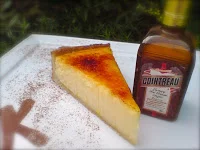
Kilroy's Lemon Tart
Anton Mosimann's Bread and Butter Pudding will be a dish that had the most indelible mark on my career and as a result I have a real love/hate relationship with it. On one hand, it opened my eyes to a new way of cooking traditional classics and through it's popularity, I got to travel around the world making it for some very special occasions. On the other hand I made so much of it that today I would have to be super-hungry to eat even a spoonful.
Kilroy's Lemon Tart became my signature dessert over a two year stint in Bermuda where I made about 5000 portions by hand on a Formica table that I hope I never have to see again. And setting up in Nepal allowed me to develop Seared Chicken Breast stuffed with Nak's Cheese (- yes the spelling is correct: if you’re thinking the milk came from a yak, it's worth bearing in mind that a yak is male) and remains the signature dish in our restaurant to this day.
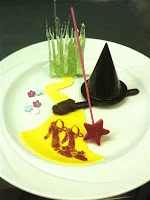
Dessert 'Wizard of Oz'
Thinking back to some of the life-changing milestones in my life's map of discovery, I fondly remember suchdishes as Sauerkraut in St. Moritz or Thukpa in Tengboche or Sel Roti in Sikkim. Which make me think that perhaps the greatest thing about cooking is that the act of doing so - with it's aromas, textures and flavours - will take you right back to that place or moment in time you want to experience again. Like listening to a song.
More importantly, this allows you to ‘emotionally connect’ with your guest in a very fundamental way, either by sharing with them YOUR experiences through a carefully crafted menu or by allowing them to create new milestones for themselves by putting them in a great atmosphere, where the service and food will be immortalised in their future memories and reminiscences.
The Myth of 'Cheaper by the Bottle'
My strategy to encourage a good following of regulars in the bar (to supplement our dining revenue) was to make it 'cheaper by the glass'. In this case, perhaps £3.85.
But is this fair to your diners who you want to encourage to return? Well let's think about that for a minute. Whether it is the couple on Table 1 or the group on Table 12, they will tend to order by the bottle regardless of pricing for any number of the following reasons:
To quickly get 'settled in' for the evening or occasion.
To enjoy the 'sharing' element that such a purchase brings.
To avoid the hassle of looking for the waitress every time they need a refill.
To show off. (To their date, to other tables nearby or sometimes just their wealth.)
To feel pampered.
To get a quick consensus (in a group)
To easily calculate everyon's share of the bill.
And because they figure they will be paying less for it as it's usually 'cheaper by the bottle'.
Therefore if you charge less by the glass:
The average diner won't notice - especially if the food and service meet expectations.
The astute diner will figure it out and perhaps order by the glass. (But will they count how many they have?)
And the best diners won't care - and they are the ones you should be working to attract anyway by exceeding their expectations.
And if you still need convincing why your bottles should bring in more revenue, don't forget about the added cost to your bottom line for the service staff, linen, rented floor space and general cost of time and energy that adds up while uncorking and topping up at the table.
Meanwhile in the bar, very few of your punters buying their drinks in rounds will calculate how much wine they are consuming by the glass and consequently drink more of it. And if they think it is good value, they will convince themselves to have another round since they are "saving" every time they spend.
Are you earning too much money?
So we agree that you're earning just enough money (if there is such a thing). And when you finally get your hands on this hard-earned cash, what do you do with it? Generally it's used to pay the essential bills and get the basic things we need to keep us going until we are left with a little bit (hopefully) at the end that we can call our own. This is the bit I want to think about for a minute.
When you spend that money on say, a coffee or a sandwich or perhaps a beauty product in the sales, how do you expect to be treated by the person serving you? To be miserable, grumpy and rude? I don't think so. We want to be smiled at and spoken with. We want them to make us feel special. We want to feel that our custom counts for something. We want to be appreciated (not to be confused with just thanked). In an ideal world we want it to be a rich and warm experience.
Is this how we treat our customers who come in to spend their hard-earned money in our business. Do we make the effort to genuinely smile (even on the phone, it shows), or say a few words of chitchat beyond a mere 'can I help', or go that little extra and offer to bring it to the table or carry it to the door? These are the so-called 'little things' that count really big in turning that mundane transaction into a rewarding customer experience that might encourage a return visit. And paradoxically the experience can be as rewarding for us too.
One final point: Just think how much would it cost to buy an uplifting experience like that. Although great service is expected as part of our customer's purchase, how we deliver that service, for better or worse, remains something we give away for free. In the case of an exuberant, outgoing and talented Barista, it might just be the price of a coffee.
Every person. Every day. Every Time.
But first, let me explain how this bout of philosophical navel gazing cropped up. As we neared the end of another hectic term last November I found myself looking for some nugget of motivation that would slingshot me through the hectic Christmas period ahead and into 2011. It came in the form of a rather innocuous question in my annual and first ever - appraisal at that time; “Are you delivering excellence?” Hmm, I would have to think about this carefully because truthfully I knew there was room for improvement.
A few days later in a very unkempt changing room I suddenly had an epiphany about this excellence I was meant to be delivering which has since given me enough motivation for months to come - enough to start this blog even! You see, while I had been thinking about the big showy VIP things that we tend to focus on most of the time, I was overlooking the everyday mundane tasks (such as keeping this changing room tidy) that also require excellence from every member of my team.
With this newfound perspective, I put it to them; how does our Kitchen Porter deliver excellence? How can HE deliver excellence when he doesn't cook fabulous food for a living? (Or even mediocre food for that matter). Nor does he serve Champagne to our guests with panache. After all that's not his job. His lot is to mop the floor, wash the pots, throw out the trash and keep smiling throughout. I guess in his case the more fundamental question is 'how can WE help him to deliver excellence?'
Picture yourself, I continued, standing in the changing room with the state it is in most of the time and consider the question again. Would a visitor, senior manager or contractor using the facility think so?
From this point of view, they all agreed we had some way to go. But in doing so, we had just taken our first steps towards this elusive state we seek out. Because in admitting to our deficiency in such a key component of Hospitality, we had taken our first small step towards delivering that excellence. Every person. Every day. Every Time.
My new mantra for 2011, and I have promised to bore my team silly with it, is for each of us to ask of ourselves 'Are we delivering excellence?' Because if we do so in the banal tasks, the big showy VIP ones will take care of themselves.
Look around at the area within arms reach of you. Are you delivering excellence in how it looks?...
Start there.